
Why infection prevention moved beyond healthcare
After repeated respiratory illness seasons, infection prevention has become a standing expectation across every commercial facility type — not just clinics. Offices, gyms, schools, strata buildings and retail spaces are now judged on whether they visibly manage hygiene, not just appearance. Facility managers who treat it as a healthcare-only concern are answering for it after the fact.
The good news is that environmental infection control is largely a discipline of method, not mystery. It is about cleaning the right surfaces, with the right chemistry, for the right contact time, on a defensible schedule. A contractor who can describe that method is a safer partner than one who simply promises “hospital-grade” product.
High-touch surfaces are where transmission happens
The surfaces that transmit illness are the ones touched by many hands, many times a day. A program that cleans a floor beautifully but misses a door handle has its priorities inverted. Identify the high-touch inventory for your building and clean it on its own frequency — more often than the surrounding space.
- Door handles, push plates and handrails
- Lift buttons, light switches and security panels
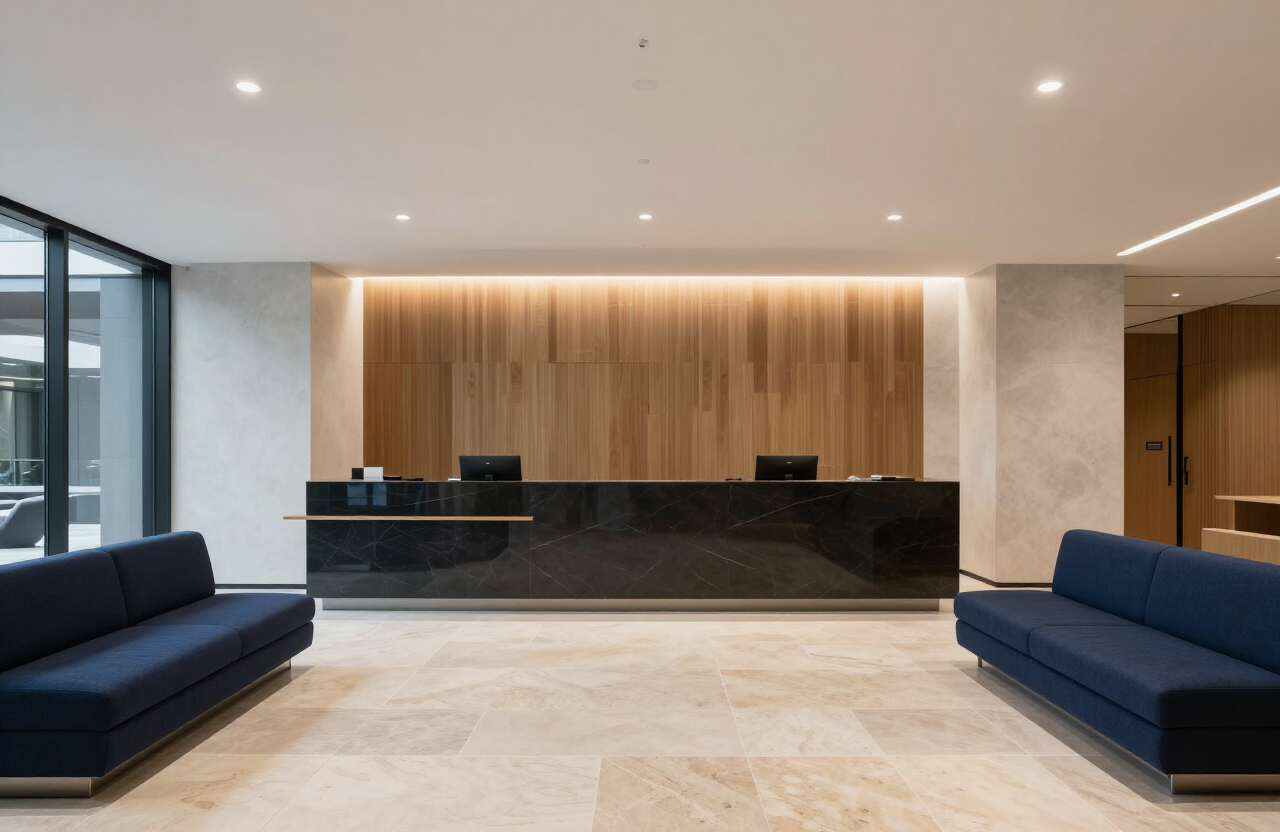
- Reception counters, EFTPOS terminals and shared pens
- Taps, flush handles and amenity fittings
- Shared equipment — printers, kitchen appliances, gym machines
Dwell time is the difference between disinfecting and wiping
A disinfectant only works if it stays wet on the surface for the time stated on the label — the dwell time. Wiping a surface damp and walking away does not disinfect it, regardless of what the bottle claims. This is the single most common gap between a contractor’s promise and their practice.
Ask a prospective contractor how they manage dwell time on high-touch surfaces. A credible answer names the product, the required contact time, and the workflow that lets the surface stay wet long enough to work. Our washroom and amenities service is built around this discipline, and our medical cleaning standards guide covers the stricter version used in clinical-adjacent spaces.
Colour coding and clean-to-dirty workflow
Cross-contamination is defeated by segregation. Colour-coded cloths, mops and buckets keep the equipment used in amenities away from desks and kitchen areas, and a clean-to-dirty workflow within each room stops a cloth carrying contamination from one zone to another. These are inexpensive controls that depend entirely on training and supervision — which is why they fail when a contractor cuts corners.
Outbreak response and surge cleaning
When illness moves through a building — a flu outbreak in an office, a gastro incident in a school, a confirmed case in a gym — the regular schedule is not enough. A contractor should have a documented surge protocol: increased high-touch frequency, targeted disinfection of affected areas, and a clear escalation contact. Agree it before you need it; the middle of an outbreak is the wrong time to negotiate response times.
Documentation and reassurance
Occupants and stakeholders increasingly want evidence, not assurances. Completed high-touch schedules, chemical registers and inspection records let a facility manager answer “what are we doing about hygiene?” with a record rather than a sentence. Our cleaning compliance checklist lists the documents worth holding, and our office cleaning schedule guide shows where infection control sits in a daily program.