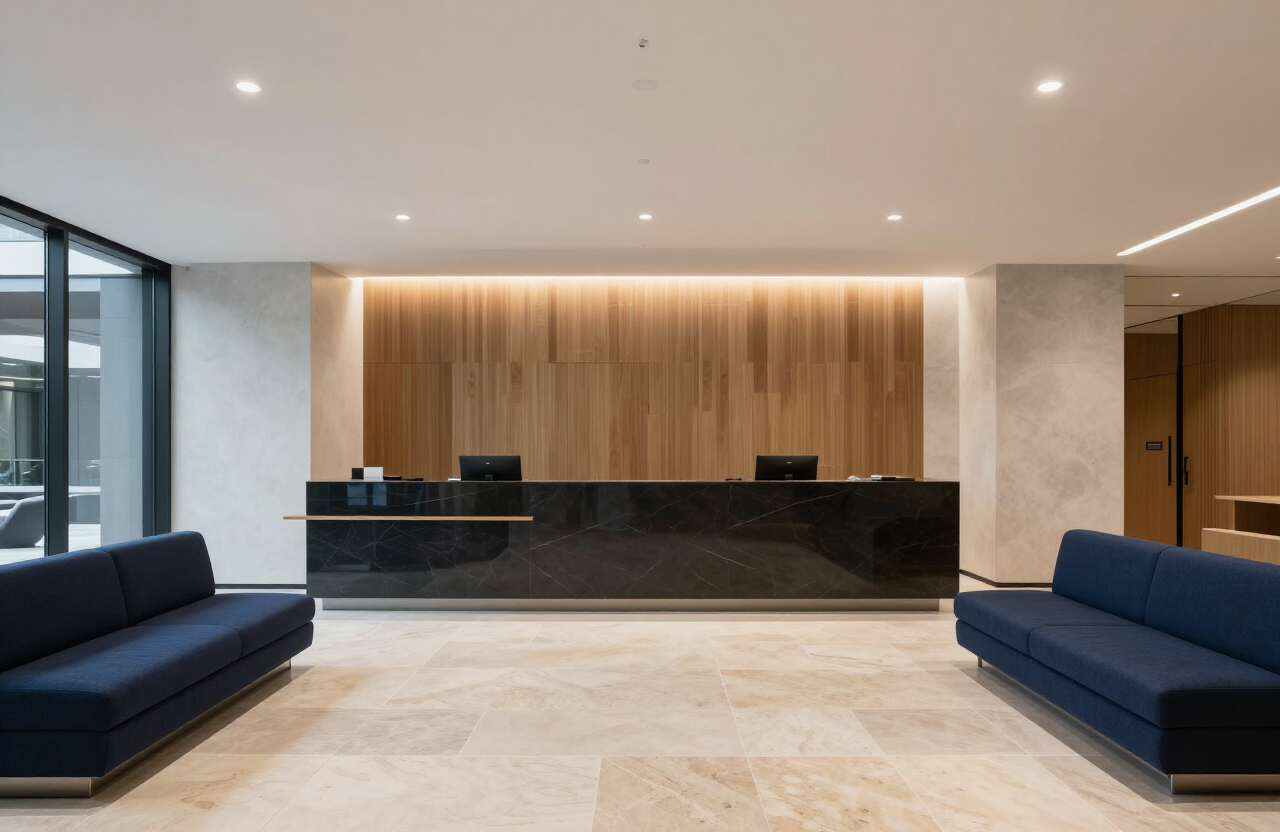

What commercial cleaning covers in a Melbourne context
Melbourne’s commercial building stock spans CBD towers, inner-city offices, campuses, clinics, warehouses and mixed-use precincts — and each behaves differently at 6am. A professional commercial cleaning program is scoped around how your building actually operates, not lifted from a template.
The practical difference from domestic work is structure: defined areas, defined frequencies, defined presentation standards and a named person accountable when something is not right. A domestic arrangement cleans until it looks clean. A commercial contract specifies what “clean” means and proves it was delivered.
- Daily and scheduled cleaning of workspaces, reception and common areas
- Amenities and washroom servicing with consumables management
- Periodic work — carpets, hard floors, glass and detail cleans
- After-hours delivery so daytime operations are not interrupted
Schedules built around your building, not a template
The first question a serious contractor should ask is not “how many square metres?” but “how does your building operate?”. Access conditions, security requirements, tenant mix and business hours all shape the schedule. A trading-floor office, a medical suite and a civic building need completely different service windows.
In Melbourne that also means planning around the things that compress schedules: event seasons in the CBD, end-of-financial-year fit-outs, and buildings where cleaning must finish before early trading or after late tenants. A contractor who cannot describe how they handle access, lifts and after-hours security has not done this before.
What a professional scope should include
Before you compare prices, compare scopes. A vague scope is where cleaning contracts fail — both sides believe something different was agreed, and the relationship sours at the first missed area.
- A room-by-room or area-by-area schedule with frequencies against each line
- Presentation standards — what “done” looks like for each area type
- Consumables: who supplies them, who monitors them, who restocks them
- Periodic works (carpets, floors, glass, detail cleans) with their own calendar
- An escalation path with a named management contact and response times
Compliance and insurance in Victoria
Whoever cleans your building becomes part of your duty-of-care chain. Before work starts, a Victorian contractor should provide current public liability insurance, workers compensation, and — if they supply personnel — a labour hire licence. Our cleaning compliance checklist lists every document worth asking for, and how Caspian handles compliance is part of the contract, not an afterthought.
How to evaluate a Melbourne cleaning contractor
Ask for a specification in writing before you ask for a price. Check references from buildings like yours — an office tower reference tells you little about a clinic. Walk the site together and watch whether they ask about access, security and tenant sensitivities. Our guide on how to choose a commercial cleaning contractor breaks the evaluation into a procurement-ready checklist, and our office and commercial cleaning page shows what a sector-specific program looks like.